
Search Website

Alzheimer's Disease
Alzheimer's Disease

Alzheimer's Disease
Alzheimer’s disease is a neurodegenerative condition that can affect thinking and memory. It is the most common form of dementia. As of 2020, there were over 55 million people globally living with dementia, and that number is expected to double every 20 years.
Currently, there is no good treatment to reverse the progression of Alzheimer’s disease and other types of dementia, but there has been some progress in managing symptoms.
BrainsCAN-supported studies are making inroads in understanding Alzheimer’s disease and dementia, and mapping out potential avenues for future treatments.
Where does the damage start?
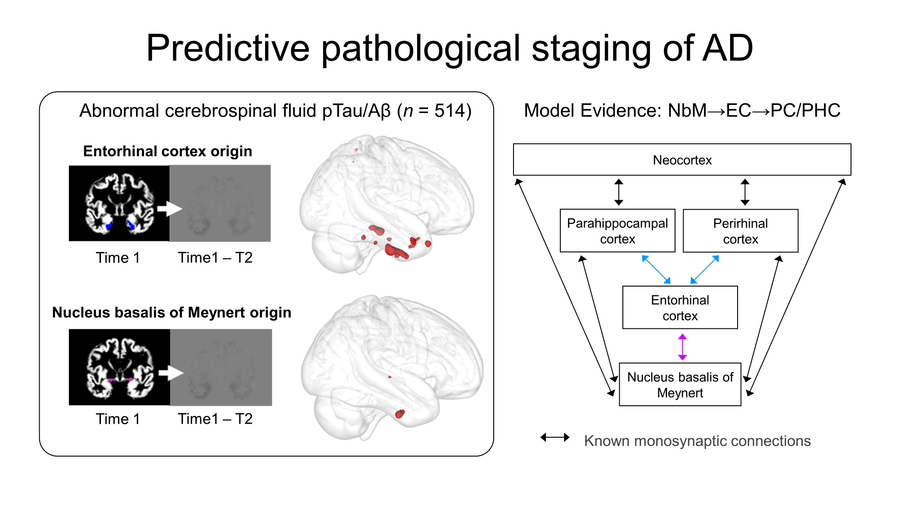
A study published in the journal Brain confirmed a new pathway for degeneration in Alzheimer’s. It found that parts of the brain experience degeneration before other areas are affected.
In fact, it found that degeneration in the basal forebrain can predict damage to other areas that are responsible for things like memory. Identifying earlier brain deterioration is another step towards identifying Alzheimer’s disease and potentially acting before symptoms even appear.
Potential target ruled out
An additional study published in Neuron has helped rule out potential drug targets for Alzheimer’s disease that have been a focus for years.
The study found that overstimulation of M1 receptors can actually disrupt or block working memory activity, contrary to how the receptors were long thought to function. The receptors are abundant in areas crucial to cognition, so they were being targeted by Alzheimer’s researchers.
Blood flow and diagnosis
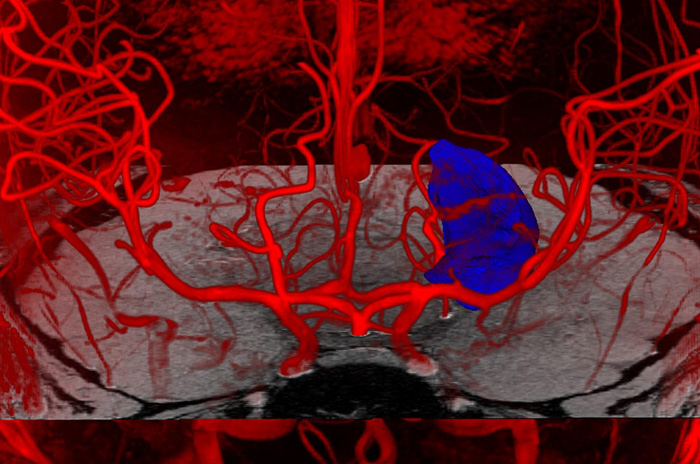
We also have a better understanding of blood flow in a healthy brain compared to damaged areas thanks to a study published in PNAS looking specifically at the hippocampus – which plays a big role in cognition and memory.
Researchers developed a non-invasive method and incorporated computational neuroscience to better understand how blood moves in the brain, which could help with diagnosing diseases like Alzheimer’s, epilepsy and schizophrenia.