

Systemic bias leaves women’s health research lagging
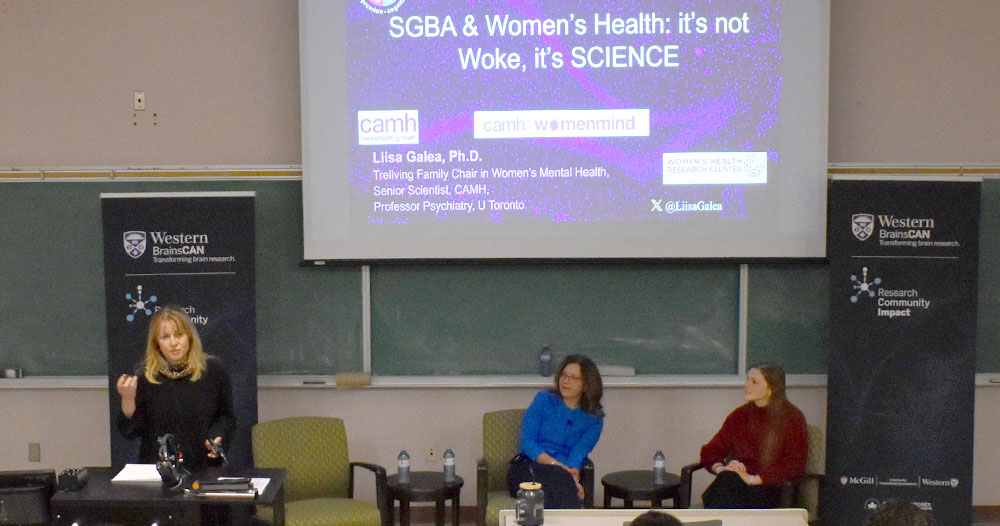
Sex- and gender-based analysis plus (SGBA+) strategies are starting to help advance health research on women and diverse individuals, but meaningful science is still needed to improve outcomes.
While you likely know that women live longer than men, most don’t know that women tend to spend more of their lives living with chronic illnesses, are at higher risk for some illnesses, and it often takes longer for them to be diagnosed.
Speaking at Western University recently, Liisa Galea, PhD‘94, Treliving Family Chair in Women’s Mental Health and senior scientist at the Centre for Addiction and Mental Health (CAMH), highlighted the ongoing challenges in women’s health research and the need for sex and gender-based work.
“There are going to be many reasons for (a delay in diagnosis), both on the biological and social side of things, but I think one of the major reasons is because most of our medical knowledge, including the way we diagnose people, is based on males and on the experiences of men,” she says.
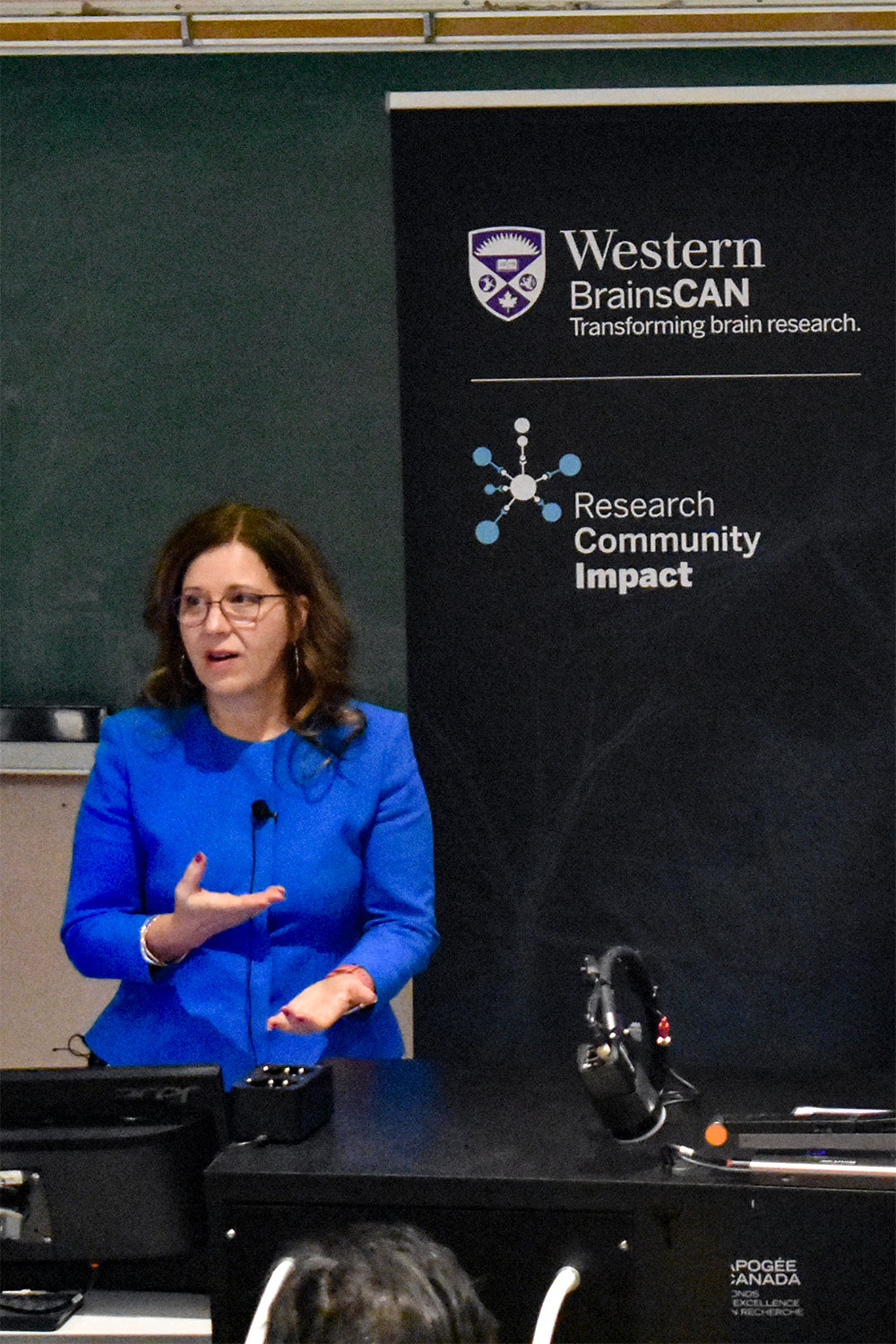
Liisa Galea, PhD
From genetics, to hormones, to hormone receptors, to external factors, and differences in lifespan, it’s not a binary situation, it’s just not that simple, Galea adds. Systemic bias has resulted in consequences not only for patients, but also for researchers, clinicians, funders, and publishers.
Galea says there are too many differences for men to serve as the standard. While there are similarities, it’s a bit like “trying to fix a refrigerator with an oven manual,” and significantly more work needs to be done to understand differences in a diverse patient population.
“These differences that are observable in the clinic are really just the tip of the iceberg, or the surface of a deeper biological mechanism,” explains Kendra Loedige, a PhD candidate in neuroscience at Western University. “There are sex differences at every level of our neurobiology, from how our brains are structured and function to how our circuits and synapses are organized, and how these are all influenced by our hormones.”
This is where pre-clinical models can really allow for the testing of causality and how different interventions work below the surface - work that can’t be done in humans. Though even then, Loedige points out, there are environmental variables that can affect this research, in addition to the biological mechanisms.
“It’s important in our neuroscience research that we’re looking at each of these levels through the lens of sex to understand what is shared and what is different during brain function and dysfunction, to try to understand these differences that exist on the surface.”
Many challenges remain in trying to better understand sex- and gender-based differences in health, but little will change if there isn’t a shift in perspective.
“We’re not going to get further ahead for women’s health if we’re always comparing to men’s health,” Galea says. “We know there are a number of female-specific experiences that are unique, that already contribute to our health outcomes and disease risk, and deserve study without the standard of males.”
Embracing the complexity and variety of data, building models based on the ‘who’ and ‘when,’ and rethinking existing principles - that are entirely based on the male experience - are essential to better science and finding different therapeutic approaches.
“We’ve got to do better out there,” Galea adds. If we don’t understand the mechanism, she says, “It results in delays in diagnosis, missed opportunities for early intervention, slower adoptions of precision medicine, it costs lives, and it costs the economy.”
To learn more about this topic, you can listen to Galea's podcast, Women's Health Interrupted.
You can watch the full seminar below.